Top Benefits of Using a CNC Lathe Machine for Precision Parts?
In the manufacturing industry, precision is paramount. The Cnc Lathe Machine stands as a crucial tool for achieving accurate parts. According to a recent report by Technavio, the global CNC machine market is expected to grow by 8% annually through 2025. This surge highlights the increasing reliance on CNC technology.
Utilizing a CNC lathe machine streamlines production processes. It can reduce errors significantly and improve production speed. Many companies report a 20-30% increase in productivity after adopting CNC technology. However, it’s worth noting that not all operators are fully trained. Skill gaps can lead to mistakes, often negating the advantages of such machines.
The CNC lathe machine also offers versatility. It can work with various materials, from metals to plastics. Yet, some manufacturers still hesitate to make the switch due to initial costs. These factors should not overshadow the long-term benefits. Embracing CNC technology allows companies to remain competitive and deliver high-quality parts consistently. The attention to detail in using a CNC lathe machine is an essential step toward excellence in modern manufacturing.
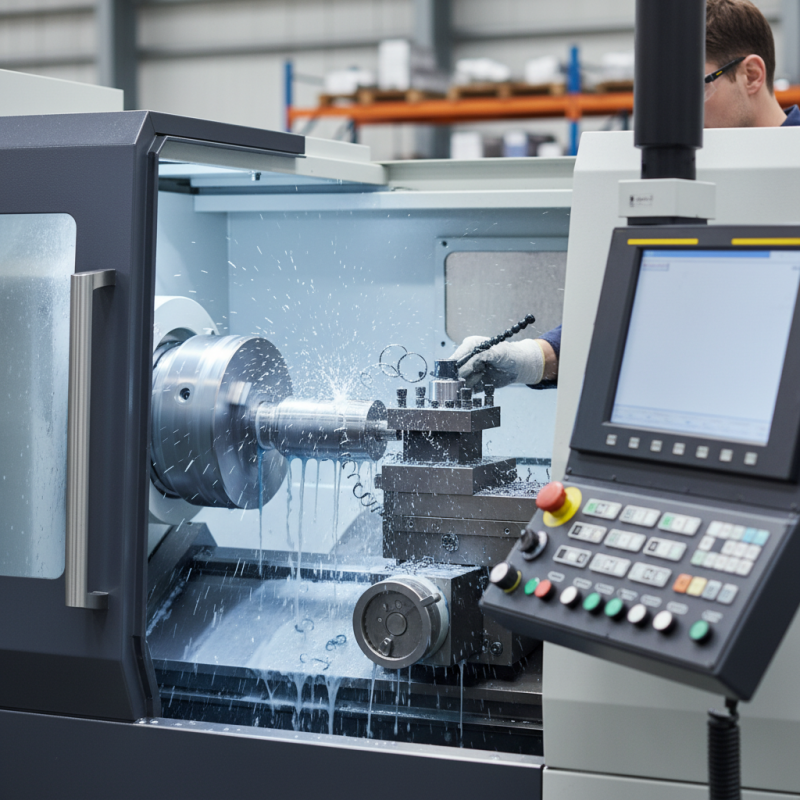
Advantages of CNC Lathe Machines in Precision Manufacturing
CNC lathe machines are revolutionizing precision manufacturing. They offer high accuracy and repeatability for complex parts. This technology can create intricate designs quickly. Operators can input specific programs for unique specifications. This leads to fewer errors and less material waste.
Flexibility is another key advantage. CNC lathes can handle various materials, from metals to plastics. This makes them suitable for different industries. However, the learning curve can be steep for new operators. Mastering the software requires time and practice. Even small programming mistakes can result in defective parts.
Moreover, CNC lathe machines improve productivity. They can run unattended for extended periods. This allows for continuous production. Yet, maintenance is crucial. Regular checks are needed to avoid breakdowns. Ignoring this can lead to costly downtimes. Finding the right balance between automation and human oversight is essential for optimal performance.
Top Benefits of Using a CNC Lathe Machine for Precision Parts
Enhanced Accuracy and Consistency in Part Production
CNC lathe machines have transformed the manufacturing landscape, particularly in producing precision parts. Enhanced accuracy is a core benefit. According to a report from IMTS, CNC machines can achieve accuracy levels of up to ±0.001 inches. This precision reduces the likelihood of defects, ensuring parts fit perfectly every time. Even minor deviations can lead to significant failures, making accuracy critical in high-stakes industries like aerospace and medical devices.
Consistency is another key advantage. With CNC technology, manufacturers can produce thousands of identical parts without variations. A study by the National Institute of Standards and Technology highlights that consistent quality can improve production efficiency by up to 40%. However, achieving this consistency requires proper setup and maintenance. A neglected machine may produce inconsistent results, challenging reliability. Operators must monitor systems closely to identify potential issues before they escalate.
While CNC lathes offer remarkable benefits, they also present challenges. The initial investment can be daunting for small businesses. Additionally, the learning curve for operating CNC machines may deter some workers. Training is essential to harness the full potential of these machines. Despite these hurdles, the advantages of enhanced accuracy and consistency make CNC lathes a worthwhile consideration for precision part production.
Increased Efficiency and Reduced Production Time
CNC lathe machines are revolutionizing manufacturing. They enhance efficiency significantly. Studies show a reduction in production time by 30% to 50% when using CNC technology. This is crucial in industries where time translates to money. A faster turnaround means quicker delivery to clients.
With CNC lathes, production processes become more reliable. Operators can achieve tighter tolerances consistently. Tolerances can be as low as ±0.001 inches, which is vital for precision parts. However, the learning curve can be steep. Operators need proper training to maximize machine potential. Mistakes can be costly and may lead to waste.
The integration of CNC lathes can be disruptive. Established processes might face challenges during the transition. Not all teams adapt at the same speed. Some may resist change due to a lack of understanding. Embracing these machines is beneficial, but the transition can require patience and adjustments.
Versatility in Material Handling for Diverse Applications
CNC lathe machines are known for their versatility. They can handle various materials like metal, plastic, and wood. This flexibility makes them ideal for different applications. From automotive parts to intricate jewelry, the potential is vast. Each material requires specific settings and tools, which can be a learning curve. Understanding your materials is crucial for achieving precise results.
Tips for working with different materials: Always test your settings first. A small piece can save you from larger mistakes. Pay attention to the cutting speed and feed rate. Each material may react differently. Some may chip easily, while others require more pressure. Adjust based on your findings.
More than just switching materials, you may face challenges. For instance, some materials can warp or melt if machined incorrectly. Be patient and revise your processes. Experimentation is part of mastering CNC lathes. Document your settings for future reference. These notes will prove valuable as you refine your techniques. Adaptability will ultimately lead to better quality parts.
Cost-Effectiveness of CNC Lathes in Scale Production
CNC lathe machines are a game changer in precision parts production. They offer unmatched accuracy while maintaining efficiency. When it comes to large-scale production, cost-effectiveness is paramount. CNC lathes operate with minimal waste, reducing material costs significantly.
Automation in these machines leads to faster cycle times. They can produce parts continuously, speeding up the output. However, initial investment costs can be high. Companies must weigh upfront expenses against long-term savings. A wiser approach is to look for opportunities to improve these processes continually.
Though CNC lathes enhance productivity, skilled operators are essential. Training staff to effectively manage these machines is vital. There may be a learning curve that slows down production initially. Yet, with time, the benefits of utilizing CNC lathes in scale production become clear. Consistent performance and precision often justify the costs involved.
