How to Choose the Right Telescopic Boom Crane for Your Project?
Choosing the right telescopic boom crane for your project can be challenging. John Smith, an industry expert in crane operations, emphasizes, “Selecting the right crane is crucial for project success.” With numerous options available, understanding key factors is essential.
Telescopic boom cranes offer great versatility and reach. They are ideal for urban construction sites where space is limited. However, making the right choice involves more than just size. Capacity ratings, maximum height, and operational range also matter. It can be overwhelming, and each project has unique needs.
Some users overlook essential details during the selection process. They might fail to assess the crane’s maneuverability or ground conditions. These oversights can lead to costly delays and safety issues. Reflecting on past experiences can guide smarter selections in the future. Ensuring the right fit for your project requires careful consideration and expert input.
Understanding the Basics of Telescopic Boom Cranes
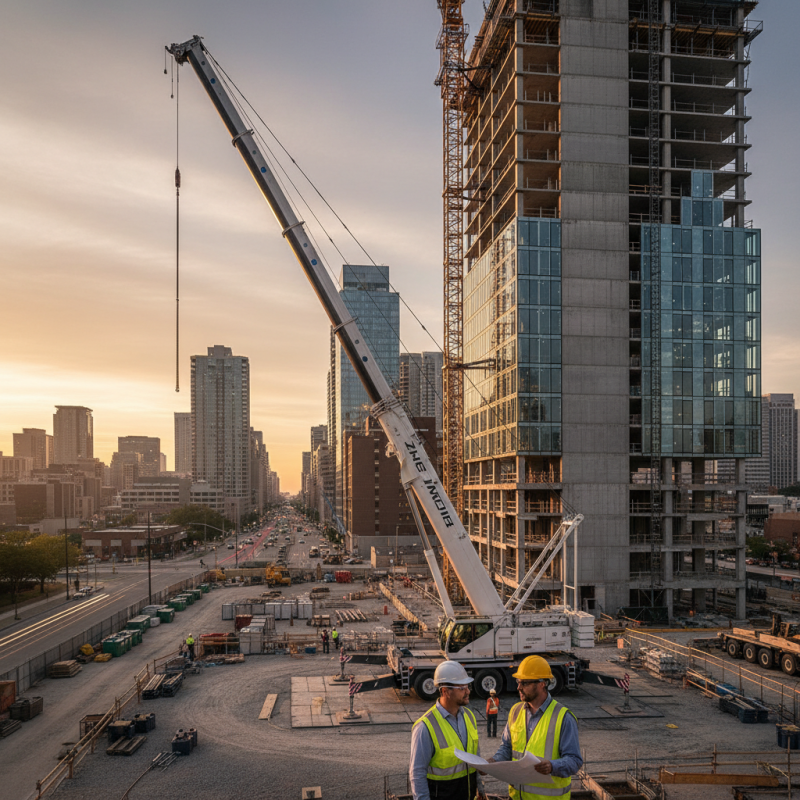
Understanding telescopic boom cranes is essential for any construction project. These cranes have a series of tubes that extend and retract. This design allows for versatility in lifting operations. They can reach high elevations and maneuver in tight spaces. The crane's flexibility is vital when considering job site constraints. However, it can also lead to complications. For instance, extending the boom too quickly could affect stability.
Safety features are critical to consider. A good crane should have overload protection and stability indicators. Operators need thorough training to ensure safe operation. Often, operators rush into using the equipment without proper checks. This can result in dangerous scenarios. For example, overlooking a maintenance check before a high-stakes lift can be catastrophic.
Weight capacity is another aspect to evaluate. Each project requires different lifting needs. Understanding how to calculate the required capacity is vital. Misjudging these needs can lead to using an inadequate crane. It is essential to reflect on past experiences. Everyone can improve their judgment for better selections in the future. Every mistake provides an opportunity to learn and adapt.
Understanding Telescopic Boom Crane Capacities
Evaluating Lifting Capacity and Reach Requirements
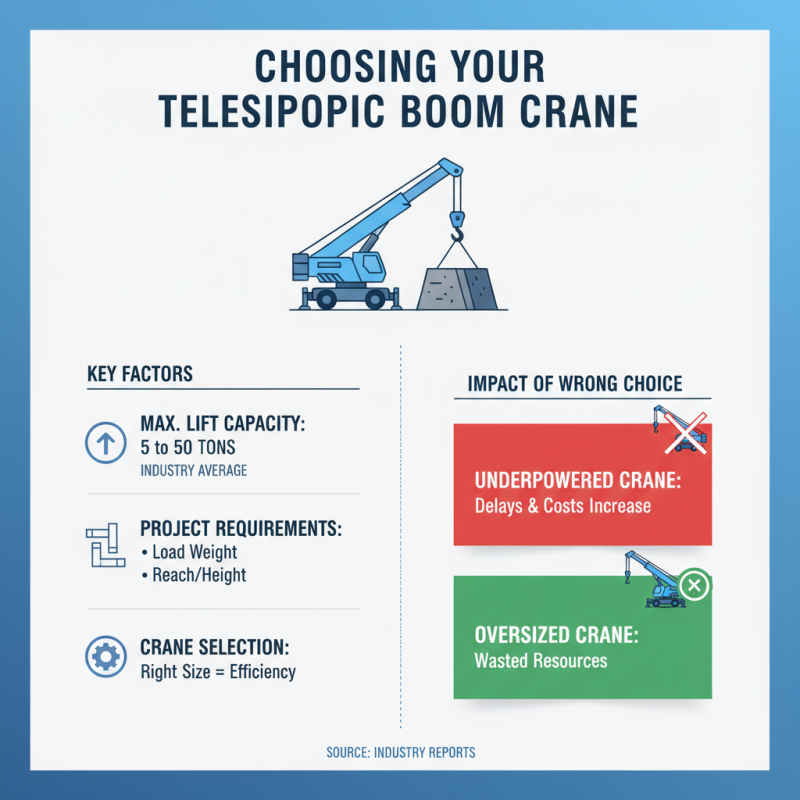
When choosing a telescopic boom crane, evaluating lifting capacity and reach is crucial. The lifting capacity determines how much weight the crane can handle safely. Consider the heaviest loads you need to lift. Overloading the crane can lead to accidents. Always consult the crane's specifications to match your project needs.
Reach requirements are equally important. This refers to how far the crane can extend its boom. Different projects demand varying reach levels. If you're working on a construction site with tall structures, a crane with longer reach is essential. Shorter reaches may be sufficient for ground-level tasks but can hinder work efficiency.
Tips: Always measure the height and distance to your loads. This will ensure you select a crane that meets all your requirements. Don’t overlook the terrain. Slopes or uneven ground can impact the crane's stability. Regularly inspect your crane to ensure it operates safely. If unsure, consult with professionals. Remember, the right choice can save time and reduce risks.
Identifying Suitable Crane Models for Your Project
Choosing the right telescopic boom crane involves understanding your project’s specific needs. Various models serve different purposes, so identifying a suitable crane is crucial. For instance, according to industry reports, cranes with a lifting capacity of 35 tons are ideal for most construction tasks. They provide both flexibility and strength in various work environments.
Consider the height requirements of your project. Some cranes can extend up to 60 meters, offering great reach. However, think about the stability factor. High-reaching cranes may require additional support. Not all sites can accommodate this. Many operations overlook ground conditions, which can limit the crane's performance.
Tips:
- Assess the load type. Is it lightweight or heavy? Heavy loads need cranes with more capacity.
- Another tip is to review the crane’s maneuverability. Some models turn in tight spaces, which can save time.
- Remember, making the wrong choice can lead to project delays. Evaluate your options carefully. Prioritize safety and efficiency before making a decision.
Assessing Safety Features and Compliance Standards
When choosing a telescopic boom crane, safety features should be a top priority. Look for cranes equipped with overload sensors. These sensors can prevent potential accidents by stopping operations when the load exceeds safe limits. A functioning emergency stop system is crucial too. It allows operators to act quickly in emergencies. Consider cranes with a stable base design. This reduces the risk of tipping. Stability features are essential, especially on uneven terrain.
Compliance with industry safety standards is non-negotiable. Check if the crane meets local and international standards. This includes structural integrity and operational safety. Documentation should be readily available. Regular inspections should be part of your project plan. Some organizations provide certifications. Still, ensure these meet your project requirements. Continuous monitoring of the crane's condition is vital. Implement protocols for routine checks.
Be mindful of the operators’ training. Even the safest crane can be dangerous in untrained hands. Invest time in training sessions. Mistakes can happen, even with the best equipment. Safety isn't just about the machine; it's about the people using it. Reflections on past experiences can enhance safety culture on-site. No detail is too small when lives are at stake.