What is a Heavy Crane and Its Types of Operations?
Heavy cranes play an essential role in various industries. These machines are built to lift and move heavy loads with precision. According to industry expert John Smith, "Heavy cranes are the backbone of construction sites; they enable projects to progress efficiently and safely."
Different types of heavy cranes operate in unique ways. Mobile cranes are versatile and can navigate various terrains. Tower cranes provide height for tall buildings. Crawler cranes offer stability on uneven ground. Each type serves specific purposes, highlighting the importance of selecting the right crane for the job.
However, using heavy cranes presents challenges. Operators must undergo extensive training to handle these complex machines. Safety measures are vital to prevent accidents. This focus on safety reveals the industry's need for improvement. In a constantly evolving environment, reflecting on operational practices is crucial for progress.
What is a Heavy Crane? Definitions and Characteristics
Heavy cranes are essential equipment in construction and industrial operations. They are designed to lift, move, and place heavy loads. Heavy cranes come in various types, including tower cranes, gantry cranes, and truck-mounted cranes. Each type serves different functions and is suited for specific tasks.
Tower cranes are often used in high-rise construction. They provide excellent lifting height and radius. A typical tower crane can lift loads exceeding 18 tons, making it crucial for skyscraper projects. Gantry cranes, on the other hand, operate on a track and can lift heavy items like shipping containers. They are vital in ports and warehouses.
Tip: When selecting a crane for a project, consider factors such as load weight, height, and radius. Proper assessment can prevent project delays and increase safety.
Heavy cranes possess numerous characteristics. They are usually equipped with advanced control systems for precision. Moreover, safety features are crucial. For instance, overload protection systems ensure that cranes do not exceed their lifting capacity. Despite their advantages, improper use can lead to accidents. It’s essential to train operators thoroughly and follow safety protocols.
Tip: Regular maintenance checks on cranes can enhance their performance and extend their lifespan. Neglecting maintenance can lead to costly downtime and safety risks.
Types of Heavy Cranes: An Overview of Major Categories
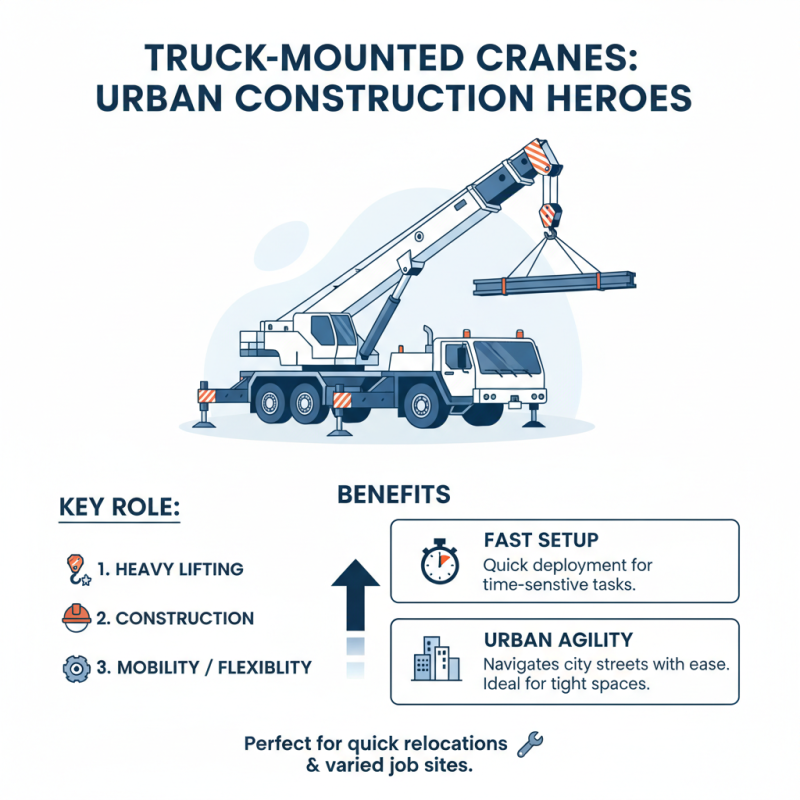
Heavy cranes play a vital role in construction and heavy lifting. They come in various types to suit different operations. One common type is the truck-mounted crane, which offers mobility and flexibility for urban jobs. These cranes can easily navigate through city streets. They are ideal for tasks requiring fast setup and quick relocation.
Another significant type is the crawler crane. These cranes feature tracks instead of wheels. This design provides stability on uneven ground. Crawler cranes excel in lifting heavy materials on construction sites. However, they are slower to move compared to truck-mounted cranes.
Ring cranes, also known as tower cranes, are crucial for high-rise buildings. They can lift heavy loads to great heights. Their long arms can rotate 360 degrees. Yet, they require careful placement and planning, which can be challenging. Each type of heavy crane has unique strengths and weaknesses. Understanding these differences is essential for optimizing operations.
Operational Capabilities: Lifting Capacity and Reach
Heavy cranes are vital in construction and industrial sectors. Their operational capabilities significantly depend on lifting capacity and reach. For instance, most heavy cranes can lift loads ranging from 10 tons to over 1,000 tons. This wide range allows them to cater to various projects. A recent industry report highlights that cranes with a lifting capacity above 300 tons are increasingly in demand. These cranes are essential for heavy-duty operations, such as building bridges and high-rise structures.
Reach is another critical factor. Cranes often have boom lengths exceeding 200 feet. This enables them to access hard-to-reach areas on job sites. However, limitations exist. Not all cranes can operate efficiently at maximum reach with heavy loads. It can lead to safety risks and operational inefficiencies. According to a survey by the Crane Association, improper use and overloading remain common issues. Often, operators underestimate the importance of matching crane capacity with specific tasks.
Understanding the balance between capacity and reach is crucial for safe operations. Operators must have adequate training and equipment knowledge. Inadequate assessments of site conditions can lead to accidents. Continuous training and awareness can help mitigate these risks. Investing in advanced technologies also shows promise in enhancing operational efficiency. Yet, relying solely on technology without skilled human oversight can create vulnerabilities.
Operating Capabilities of Heavy Cranes
This chart displays the lifting capacity (in tons) and maximum reach (in meters) of different types of heavy cranes used in various operations.
Safety Standards and Regulations in Heavy Crane Operations
Heavy cranes play a vital role in construction and industrial projects. However, their operation comes with significant risks. Ensuring safety is crucial. Adhering to established safety standards can minimize accidents and injuries. Operators must be properly trained and certified. They should understand the crane's limits and capabilities.
Regular inspections are necessary. All equipment should undergo routine checks for wear and tear. Operators must be aware of their surroundings. This includes understanding weather conditions and potential hazards. A safe work environment is essential for everyone on-site. Simple miscalculations can lead to serious incidents.
Implementing safety protocols is not a one-time task. It requires ongoing vigilance and training. Communication among team members is vital. Clear signals and established roles can prevent misunderstandings. Challenges can arise when workers overlook safety measures. Reflecting on past mistakes can lead to improvements in protocols. Continuous education is key in maintaining safety standards in heavy crane operations.
What is a Heavy Crane and Its Types of Operations? - Safety Standards and Regulations in Heavy Crane Operations
| Crane Type |
Operation Type |
Max Load Capacity (tons) |
Safety Standards |
| Mobile Crane |
Construction, Heavy Lifting |
50 |
OSHA, ANSI |
| Tower Crane |
High Rise Construction |
20 |
ISO 9001, BS 7121 |
| Crawler Crane |
Site Preparation, Rough Terrain |
75 |
CSA, ASME B30.5 |
| Overhead Crane |
Warehouse, Industrial |
10 |
OSHA, ANSI B30.2 |
| Floating Crane |
Marine Construction, Dredging |
100+ |
ABS, SOLAS |
Industry Applications: Heavy Cranes in Construction and Beyond
Heavy cranes play a vital role in various industries, especially construction. Their ability to lift massive loads simplifies complex tasks. In construction, cranes transport steel beams, concrete blocks, and heavy machinery. This efficiency accelerates project timelines. Operators must be skilled to ensure safety and precision. Mistakes can lead to serious accidents or project delays.
Beyond construction, heavy cranes are essential in other fields. They are used in shipyards to lift and position large vessels. In energy production, they can erect wind turbines. Each operation requires careful planning and execution. However, not every task goes smoothly. Sometimes cranes encounter unforeseen challenges, like bad weather or site access issues. These situations require quick thinking and flexibility.
The impact of heavy cranes extends even further. They help in building bridges, towers, and industrial plants. Workers depend on them for daily tasks. Their significance cannot be understated. Yet, heavy crane operations are not without risks, and each incident serves as a reminder of the need for constant vigilance. Understanding these implications leads to better practices in the industry.