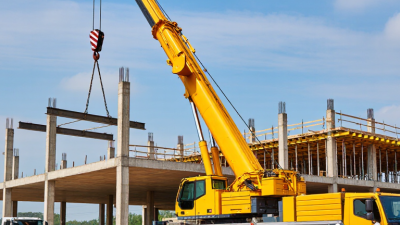
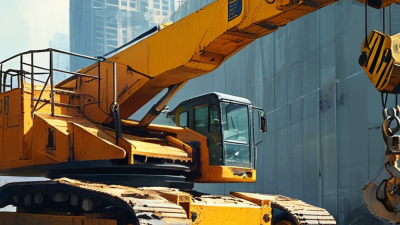
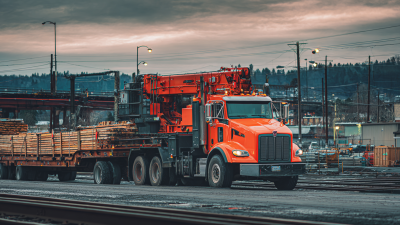
A movable crane is a lifting machine designed to travel between work areas. Unlike a fixed tower crane, it can reposition without permanent foundations. Common examples include mobile cranes, crawler cranes, and rough-terrain cranes. Each type suits different ground conditions and lifting demands. Its wheels, tracks, boom, counterweights, and hydraulic systems work together. On a busy construction site, these parts must respond smoothly and predictably. The machine may look simple from a distance. Its balance depends on many carefully controlled forces.
The operating principle is practical but highly engineered. Power from the engine drives hydraulic pumps and mechanical systems. Hydraulic cylinders raise, lower, or extend the boom. Steel wire rope and a hook transfer lifting force to the load. The operator follows a load chart before making any lift. This chart considers boom length, working radius, and rated capacity. Wind, ground strength, and load shape also affect stability. It needs room.
Real-world performance depends on more than machine specifications. Outriggers spread the crane’s weight across the ground. Tracks can improve access, but they do not remove every risk. A trained crew checks the lifting path, communication signals, and attachment points. Small errors matter. Yet diagrams often make crane operation look cleaner than it feels on site. Uneven ground, changing weather, and limited visibility can complicate an otherwise planned lift. This guide explains how a movable crane works, what its main components do, and why experienced inspection remains essential. It also examines practical limitations, because reliable lifting begins with realistic planning, not confidence alone.
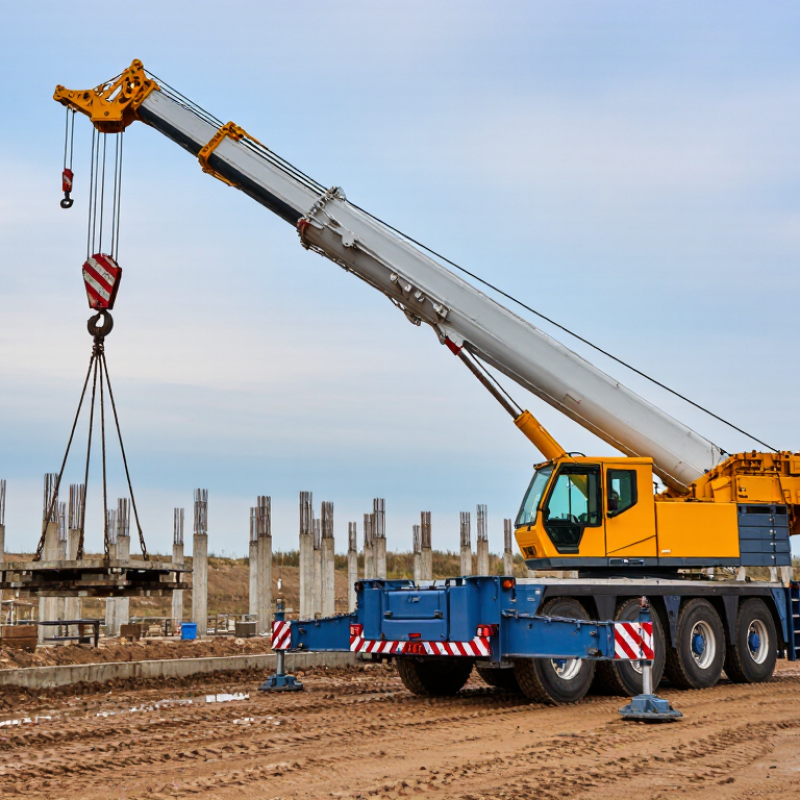
A movable crane is a lifting machine designed to travel between work areas. Unlike a fixed crane, it can be repositioned as the project changes. Its basic purpose is simple: lift, move, and place heavy materials safely. Common examples include mobile cranes, rough-terrain cranes, and truck-mounted cranes. Each type suits different ground conditions and access limits.
A movable crane usually has a telescopic boom, hook, winch, counterweights, and a carrier or wheeled base. The boom reaches upward and outward. The winch raises or lowers the load through steel wire rope. Counterweights help balance the machine, while outriggers spread its weight across the ground. On a busy site, operators may lift steel beams, concrete sections, pipes, or machinery. The load must remain within the crane’s rated capacity and working radius.
Safe operation depends on more than lifting power. A trained operator checks the load chart, ground stability, wind, and overhead clearance before moving anything. Signal communication must be clear, especially when the operator cannot see the load. Field practice shows that small errors often matter. A poorly positioned outrigger or an underestimated load radius can create serious instability. The term “movable” may sound flexible, but it does not mean unlimited mobility. In some situations, transport restrictions, uneven soil, or narrow access routes make relocation difficult. Planning is essential, although real sites rarely follow the plan perfectly.
| Data Dimension | Description | Typical Facts or Examples |
|---|---|---|
| Definition | A movable crane is a lifting machine mounted on a mobile platform, allowing it to travel between or around work locations while handling suspended loads. | The platform may be a wheeled carrier, crawler undercarriage, rail vehicle, or truck-mounted chassis. |
| Basic Purpose | To lift, move, position, and place materials or equipment without requiring a permanent foundation or fixed installation. | Common tasks include construction lifting, equipment installation, infrastructure maintenance, and material handling. |
| Main Crane Types | Different movable cranes are selected according to ground conditions, travel requirements, lifting capacity, and working height. | Typical types include mobile truck cranes, rough-terrain cranes, all-terrain cranes, crawler cranes, and carry-deck cranes. |
| Primary Lifting Components | The lifting system uses a boom, wire rope or hydraulic cylinder, sheaves, hook block, and load-handling accessories. | Attachments may include slings, spreader beams, lifting clamps, buckets, or other approved devices. |
| How the Boom Works | The boom provides vertical height and horizontal reach. It may telescope, lattice-extend, or be fitted with a lattice or hydraulic jib. | A telescopic boom changes length using hydraulic sections; a lattice boom is assembled from structural sections. |
| Movement and Positioning | The carrier allows the crane to travel or reposition, while the upper structure can usually rotate to place loads within the working radius. | Many mobile cranes provide continuous or near-continuous upper-structure rotation, depending on design. |
| Typical Rated Capacity | Rated capacity is the maximum permitted load under a specific configuration, radius, boom length, and operating condition. | Small mobile cranes may lift several tonnes, while large crawler or all-terrain cranes can be rated for hundreds of tonnes. |
| Load Moment | Lifting capability decreases as the horizontal distance between the crane’s center of rotation and the load increases. | Load moment is commonly understood as load multiplied by operating radius; the crane chart limits allowable combinations. |
| Stabilization | Stabilizers, outriggers, counterweights, or crawler tracks help distribute forces and maintain stability during lifting. | Outriggers are commonly extended on wheeled cranes; crawler cranes rely mainly on their wide tracked base and counterweight system. |
| Power and Control | An engine-driven hydraulic system typically powers the boom, winches, steering, travel, and rotation functions. | Operators control lifting speed, boom angle, boom length, swing direction, and travel through crane controls. |
| Typical Working Height | Working height depends on boom length, jib configuration, load radius, and the required clearance above the work area. | Compact cranes may serve low-rise work, while large configurations can reach well over 100 metres with added jib sections. |
| Operating Surface | The crane must operate on a surface capable of supporting its total weight and lifting reactions. | Ground bearing pressure, slope, drainage, underground utilities, and overhead obstructions must be assessed before lifting. |
| Typical Applications | Movable cranes are used where lifting points change frequently or where permanent lifting equipment is impractical. | Applications include structural steel erection, bridge work, wind-energy component handling, plant maintenance, and precast concrete placement. |
| Safety Controls | Safe operation depends on planning, trained personnel, correct rigging, inspection, communication, and compliance with the crane’s rated capacity. | Load-moment indicators, overload protection, boom-angle indicators, anti-two-block devices, and emergency stop systems may be fitted. |
| Key Limitation | A movable crane cannot safely lift the same load at every radius or in every configuration. | The approved load chart must be checked for boom length, working radius, counterweight, outrigger position, and ground conditions. |
Note: Capacity, reach, and working height vary by crane configuration and operating conditions. The manufacturer’s load chart and applicable safety regulations always take precedence.