What is a Small Crane and Its Applications in Construction?
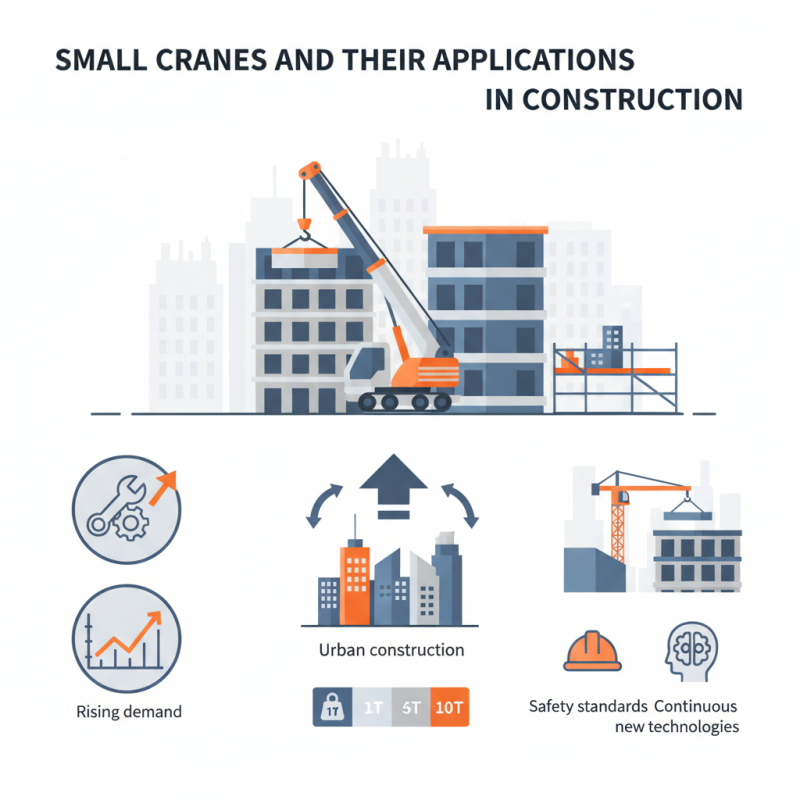
In the construction industry, small cranes play a critical role. These compact machines are designed for versatility and efficiency. According to a recent report by the Global Construction Equipment Market, the demand for small cranes is on the rise, projected to grow at a CAGR of 4.5% over the next five years.
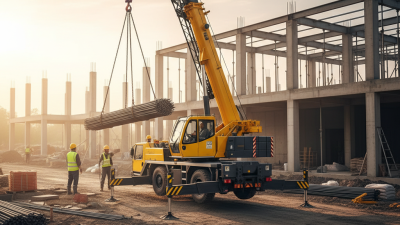
Small cranes are ideal for urban construction and tight spaces. They can lift heavy materials where larger cranes cannot fit. With capacities ranging from 1 to 10 tons, these machines can effectively handle various tasks. For instance, small cranes are commonly used for lifting materials on scaffolding or rooftops. Their maneuverability makes them essential in busy construction sites.
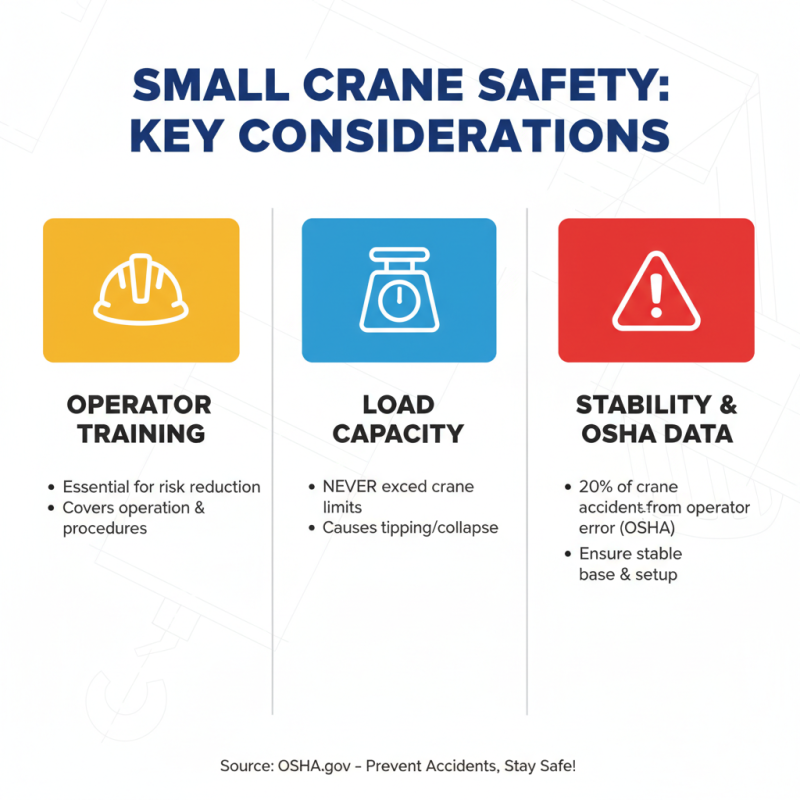
However, the use of small cranes is not without its challenges. Operators must focus on safety standards while navigating limited areas. Operational downtime due to improper use can lead to increased costs. Continuous training and adopting new technologies is vital. As the industry evolves, embracing improvements will enhance the efficiency of small crane applications.
Definition and Characteristics of Small Cranes
Small cranes are essential tools in construction. They are often defined as lifting machines with a maximum capacity of around 10 tons. Typically, these cranes offer a compact design and increased maneuverability, making them ideal for tight spaces. The International Crane Association reported that small cranes have seen a 15% increase in usage over the past three years, reflecting their growing importance in urban construction projects.
One notable characteristic of small cranes is their ability to operate in confined areas. This flexibility helps contractors manage work sites efficiently. For example, in densely populated urban environments, small cranes can navigate narrow alleyways, providing critical support for various tasks. However, not all small cranes are designed equally. They may lack the lifting power and stability seen in larger models. Hence, operators must assess each task's requirements carefully.
The versatility of small cranes extends beyond construction. These machines find application in maintenance work, tree removal, and material handling. The American Construction Industry Report highlighted that small cranes positively influence project timelines. Yet, the challenges remain. Incorrect usage can lead to accidents. Operators should receive proper training to maximize safety and efficiency. Evaluation of capacity versus task difficulty is vital in preventing mishaps.
Types of Small Cranes Used in Construction
Small cranes play a vital role in construction settings. They are versatile and compact, making them ideal for tight spaces. Various types serve different needs on job sites. Understanding these types can optimize project efficiency.
One common type is the mini crawler crane. These cranes have tracks for mobility. They work well in urban areas with limited access. They can lift heavy loads while maintaining stability. Another type is the mobile boom crane. This crane features a hydraulic boom, allowing for extended reach. It is often used for lifting lighter materials or equipment.
Articulating cranes offer flexibility. Their jointed arms can navigate obstacles easily. They excel in tight corners. However, their load capacity is somewhat limited. Electric cranes are also gaining popularity. They produce less noise and emissions. This makes them a better choice for sensitive environments. Nonetheless, they may not have the same lifting power as diesel models. Each crane type has its own strengths and weaknesses. Choosing the right crane is essential for project success.
What is a Small Crane and Its Applications in Construction? - Types of Small Cranes Used in Construction
| Type of Small Crane |
Load Capacity (ton) |
Height (m) |
Reach (m) |
Common Applications |
| Mini Crane |
1 |
2.5 |
4 |
Indoor lifting, small construction projects |
| Spider Crane |
2.5 |
4.5 |
9 |
Roofing, tight spaces, outdoor applications |
| Crawler Crane |
3 |
6 |
12 |
Heavy lifting, construction sites with uneven ground |
| Knuckle Boom Crane |
4 |
5 |
10 |
Loading and unloading materials, versatile applications |
| Electric Hoist Crane |
1 |
3 |
6 |
Factories, warehouses, repetitive lifting tasks |
Advantages of Using Small Cranes on Job Sites
Small cranes are increasingly popular on job sites. They are compact and highly versatile. Their design allows for easy maneuverability in tight spaces. This is crucial in urban environments where space is limited. Small cranes can lift heavy materials without needing expansive areas.
Using small cranes offers multiple advantages. They significantly reduce the labor needed for heavy lifting. This not only saves time but also minimizes physical strain on workers. Operators can easily transport materials to elevated areas. However, their capacity is limited. Picking up heavier loads can be challenging.
Safety is another important factor. Small cranes often come with advanced safety features. These can help prevent accidents. Still, operators must be well-trained. Mistakes can happen, and the risks are real. Regular maintenance is essential to ensure reliability. When used correctly, small cranes are invaluable tools on construction sites.
Usage of Small Cranes in Construction
Common Applications of Small Cranes in the Construction Industry
Small cranes are increasingly popular in the construction industry. Their versatility allows for various applications on job sites. One common use is in tight spaces where larger cranes cannot operate. For example, they are ideal for lifting materials in urban areas where space is limited. According to a recent industry report, the demand for compact lifting solutions has surged by 25% in urban construction projects.
Another significant application is in residential construction. Small cranes assist in lifting heavy items like HVAC units or large windows. This not only speeds up the construction process but also enhances safety. Workers can avoid strenuous lifting, which reduces injury risks. The report highlights that employing small cranes can increase operational efficiency by 15%.
**Tip:** Always evaluate the site conditions before choosing a crane. Understand the load requirements carefully.
Small cranes also excel in modular construction. They can aid in assembling pre-fabricated sections with precision. However, some challenges exist. The limited lifting capacity may restrict project scope. Be sure to balance the crane's capabilities with project demands.
**Tip:** Regular training for operators is essential. This ensures they can handle the unique challenges associated with small cranes effectively.