Top Mobile Truck Crane Benefits for Construction Projects?
Mobile truck cranes are revolutionizing the construction industry. They offer mobility and versatility, which traditional cranes often lack. According to industry reports, over 35% of construction projects utilize mobile cranes to maximize efficiency. This data highlights their importance in modern construction.
These cranes can easily navigate job sites, reducing time and labor costs. For instance, in a recent survey, companies reported a 25% decrease in project delays due to enhanced crane mobility. However, challenges remain. Operators must be skilled and well-trained to ensure safety and compliance. This raises questions about workforce training and equipment maintenance.
While mobile truck cranes improve productivity, they also necessitate careful planning. Designers must assess site conditions and crane capacity. Accurate assessments can prevent costly errors. Reflecting on these factors reveals a need for better integration of technology and human expertise in crane operations. Only by addressing these issues can the industry fully harness the benefits of mobile truck cranes.
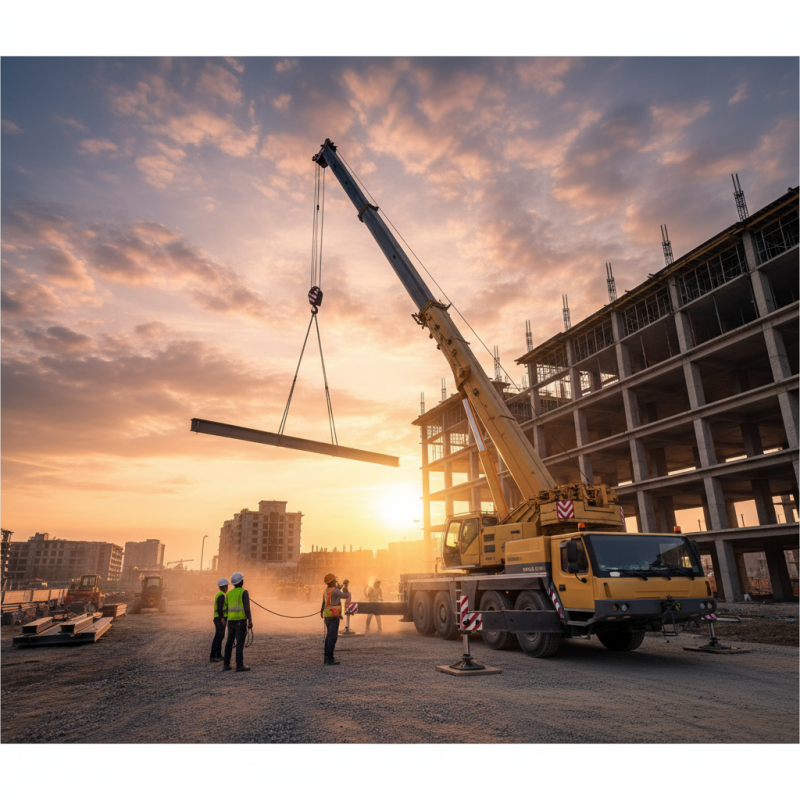
Top Mobile Truck Crane Benefits for Construction Projects
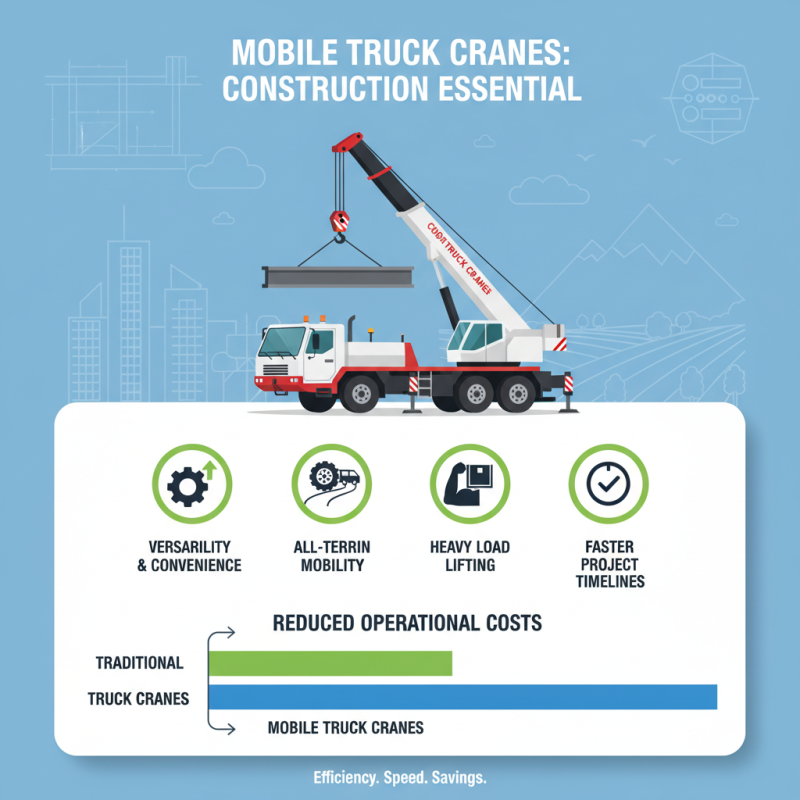
Mobile truck cranes are increasingly essential for construction projects. They offer versatility and convenience on job sites. These cranes can easily navigate different terrains, making them suitable for urban or rural settings. With their ability to lift heavy loads, they significantly reduce manual labor requirements. This efficiency leads to quicker project timelines and reduced operational costs.
One key advantage is their setup time. Unlike traditional cranes, mobile truck cranes can be ready for work in a matter of minutes. However, improper setup can lead to safety hazards. Operators must be well-trained to avoid potential accidents. Another benefit is their ability to reach high elevations and tight spaces. These features allow them to perform tasks in places where other equipment may not fit.
Despite the advantages, challenges exist. Weather conditions can hinder performance. High winds, for example, can restrict lifting capabilities. Planning is crucial to avoid delays caused by environmental factors. These considerations highlight the need for thoughtful planning and execution in using mobile truck cranes effectively.
Enhanced Mobility and Flexibility on Job Sites
In the world of construction, mobility is crucial. Mobile truck cranes excel in this area, providing flexibility that fixed cranes cannot match. They can quickly navigate tight spaces, making them ideal for urban projects or crowded job sites. This versatility saves time and enhances efficiency, allowing workers to focus on the task rather than logistics.
Tip 1: When planning a project, assess the layout. Identify areas where a mobile crane can access easily. This can significantly reduce wait times and streamline operations.
These cranes can reach various heights and positions with ease. Operators benefit from the ability to adjust quickly to changing site conditions. However, it’s essential to be mindful of the crane's weight and load limits. Overloading can lead to safety hazards and project delays.
Tip 2: Always keep communication open among team members. A well-coordinated effort ensures safe and effective operation, especially when adjusting the crane’s position.
Using mobile cranes may seem straightforward, but factors like weather and site terrain play a role. Construction teams need to prepare for unexpected challenges. Failing to do so can disrupt the workflow.
Cost-Efficiency Compared to Traditional Cranes
Mobile truck cranes offer significant cost-efficiency that traditional cranes can't match. Their mobility reduces transportation costs. These cranes can quickly move to different job sites, saving time and money. Construction projects benefit from this flexibility, allowing for faster project completion.
Moreover, mobile truck cranes usually require less setup time. Traditional cranes often need costly rigging and extensive site preparation. In contrast, mobile cranes are nearly ready to operate upon arrival. This simplicity can lead to unexpected savings in labor costs.
However, choosing a mobile truck crane may present challenges. Not every project requires a large crane. Sometimes, smaller cranes could suffice. It's important to evaluate site conditions and project needs. This assessment can prevent overinvestment in equipment that might be more than necessary. Balancing efficiency and practicality is key to project success.
Cost-Efficiency Comparison: Mobile Truck Cranes vs Traditional Cranes
This chart displays the average hourly operational costs of mobile truck cranes compared to traditional cranes. Mobile truck cranes offer significant cost savings due to their versatility and ease of transport, making them a favorable choice for construction projects.
Increased Lifting Capacity and Versatility
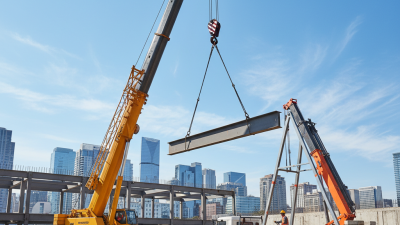
Mobile truck cranes are essential in construction. Their increased lifting capacity allows for more significant loads. This feature enables heavy materials to be moved quickly. This capability is beneficial on job sites with strict timelines. When a project requires steel beams or heavy equipment, these cranes handle the task smoothly.
Versatility is another significant advantage. Mobile truck cranes can maneuver in tight spaces. They fit easily on various terrains, adapting to different project needs. However, this adaptability can lead to challenges. Operators might need more training to navigate difficult environments. It's important to ensure safety while maximizing efficiency. Mistakes in operation can lead to delays or accidents, highlighting the need for careful planning.
Ultimately, the use of mobile truck cranes in construction enhances productivity. Their ability to lift heavy loads efficiently is invaluable. But, while their power is impressive, effective training and safety measures must not be overlooked. Investing time in operator education is crucial to fully leverage these machines.
Reduced Setup Time and Labor Requirements
Mobile truck cranes are transforming construction sites. They reduce setup time and labor requirements significantly. Workers can quickly position the crane, enabling faster operations. This efficiency minimizes delays and keeps projects on schedule.
Setting up traditional cranes often takes hours. Mobile truck cranes eliminate this complexity. A skilled operator can have the setup done in just a few minutes. This means fewer workers are needed on-site, which can lead to cost savings. However, site conditions must be assessed carefully. Not all locations are suitable for mobile cranes.
While the benefits are clear, challenges exist. Operators need proper training to handle mobile cranes effectively. Safety should never be compromised. Even with reduced labor, mistakes can happen. Construction managers must ensure that efficiency does not come at the expense of safety. Being aware of these factors is crucial for project success.
Top Mobile Truck Crane Benefits for Construction Projects
| Benefit |
Description |
Impact on Construction |
| Reduced Setup Time |
Mobile truck cranes can be quickly mobilized on-site without extensive setup, reducing downtime. |
Accelerates project timelines and enhances productivity. |
| Labor Efficiency |
Requires fewer personnel for setup and operation compared to traditional cranes. |
Reduces labor costs and allows for reallocation of workforce to other tasks. |
| Versatility |
Capable of performing various lifting tasks across different projects. |
Increases the range of applications for a single machine, optimizing equipment investment. |
| Mobility |
Can easily move from one location to another, adapting to changing job site needs. |
Allows for dynamic project management and adaptability to site conditions. |
| Improved Safety |
Designed with advanced safety features, reducing the likelihood of accidents. |
Enhances overall site safety, leading to fewer injuries and project delays. |
Conclusion
Mobile truck cranes offer numerous advantages for construction projects, making them an optimal choice for on-site lifting needs. Their enhanced mobility and flexibility allow for easy maneuverability in confined spaces, ensuring that equipment can be positioned precisely where it's needed. Additionally, mobile truck cranes are often more cost-efficient compared to traditional cranes, reducing overhead costs while providing powerful lifting capabilities.
Moreover, these cranes boast impressive lifting capacity and versatility, allowing them to handle a wide range of loads and tasks. Their design significantly reduces setup time and labor requirements, allowing projects to proceed more swiftly and efficiently. Finally, mobile truck cranes come equipped with improved safety features and compliance standards, ensuring a safer working environment. Overall, the integration of mobile truck cranes into construction operations can lead to enhanced productivity and safety on job sites.