Choosing the right telescopic mobile crane is rarely a simple matter of comparing lifting capacity. Global buyers must examine terrain, road access, wind exposure, transport limits, service coverage, and operator training. A compact truck-mounted crane may suit urban maintenance, while an all-terrain model can handle demanding construction sites and long-distance travel. Rough-terrain cranes offer strong maneuverability, but their road mobility is limited. These differences matter when a project moves from a paved port to uneven ground.
Dr. Christoph Kleiner, a recognized crane industry specialist and former managing director of Liebherr-Werk Ehingen, once stated, “The future of crane technology lies in combining performance, safety, and efficiency.” That principle remains practical. A higher lifting chart does not automatically mean better value. Buyers should study actual load charts, boom configurations, counterweight requirements, axle loads, and maintenance records. They should also verify local technical support before signing a purchase contract.
Details reveal the real equipment. A crane working beside a narrow bridge needs accurate steering and controlled setup. A coastal project may require stronger corrosion protection. A remote mine may prioritize parts availability over maximum reach. Small oversights become expensive delays.
This guide compares the best telescopic mobile crane types for global buyers in 2026. It considers working conditions, ownership costs, safety features, and long-term reliability. Still, no universal ranking exists. A well-equipped crane can fail commercially when its support network is weak. That uncomfortable point deserves attention. The best choice is not always the largest machine, but the one that performs consistently where it is actually needed.
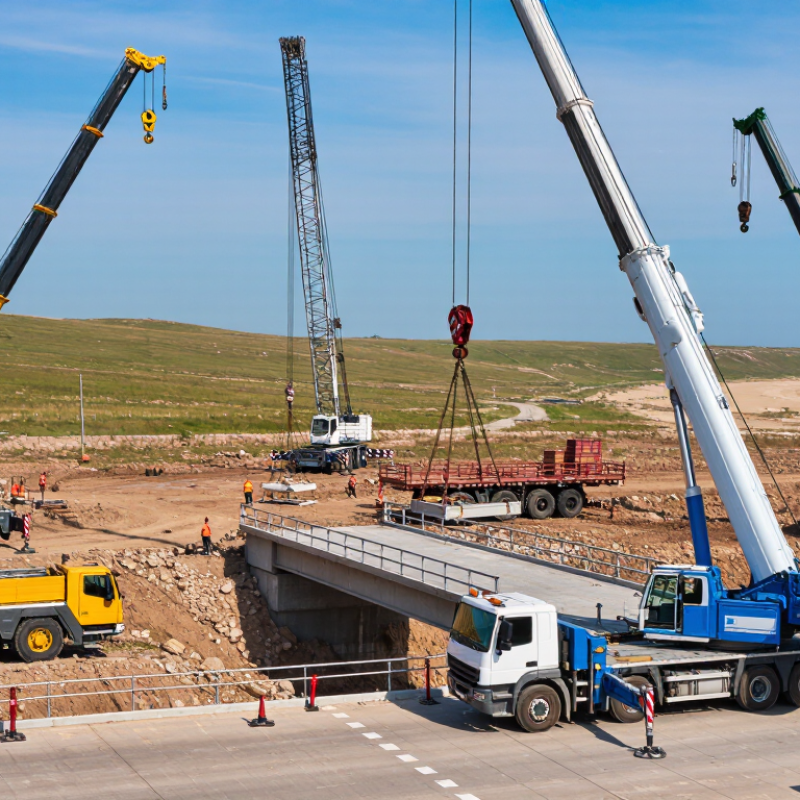
Telescopic mobile cranes usually fall into truck-mounted, rough-terrain, and all-terrain classes. Their rated capacities range from about 10 to 1,200 tonnes, while boom lengths commonly span 10 to 100 metres. A 10–80 tonne truck crane suits urban lifting, bridge maintenance, and factory installation. Rough-terrain models handle compact sites, uneven ground, and short travel distances. All-terrain cranes combine road mobility with stronger off-road performance.
Capacity is not the whole story. The load chart changes with radius, counterweight, outrigger width, and wind conditions. A 100-tonne crane may lift far less at a 50-metre radius. The European standard EN 13000 requires mobile-crane safety evaluation, while ISO 4306-1 standardises crane terminology. Buyers should compare these requirements with local inspection rules, not rely on catalogue capacity alone.
A 2024 global mobile-crane market report projects industry growth of roughly 5% annually through 2030, reflecting demand from infrastructure, energy, and industrial construction. The same market trend supports wider use of high-capacity machines above 300 tonnes. Yet larger cranes bring transport permits, ground-pressure calculations, assembly space, and specialist crews. That part is often underestimated. In field planning, a 30-metre boom with a modest radius can outperform a longer boom on a congested site. The best class depends on the lift radius, access route, soil bearing capacity, and actual duty cycle. Mistakes remain expensive.
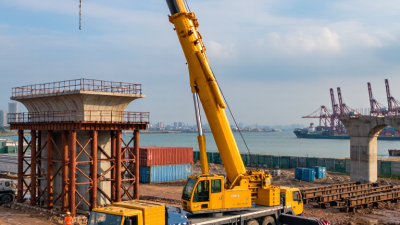
Truck-mounted telescopic cranes suit projects where lifting work begins beside a public highway. Their 10–80 tonne range covers utility repairs, bridge maintenance, factory installation, and urban construction. A telescopic boom folds into a compact road-going package. This reduces transport planning and site preparation.
Capacity alone can mislead buyers. A 40-tonne crane may lift far less at a long radius. Check the load chart, boom length, counterweight, and outrigger position together. On a narrow road, partial outrigger deployment may reduce capacity sharply. The ground also matters. Asphalt can look solid while hiding weak drainage layers. Steel mats or timber pads may be necessary.
Highway access is a practical advantage, not a complete solution. Confirm axle loads, overall height, turning space, and local road restrictions before shipment. The operator should inspect overhead cables, lane width, slopes, and nearby traffic. A spotter helps, but cannot replace a proper lifting plan. Small details matter.
For global buyers, compare hydraulic response, chassis serviceability, spare-part access, and cab visibility. A crane that performs well in a test yard may struggle in rain, dust, or severe heat. This is where specifications need questioning. Maintenance records, inspection procedures, and operator training often reveal more than brochure capacity. I would also request a radius-based working example, such as lifting six tonnes at 18 metres, before approving the purchase.
| Crane Type | Rated Capacity (t) |
Typical Maximum Lifting Moment (t·m) |
Typical Telescopic Boom Reach (m) |
Typical Road-Ready GVW (t) |
Typical Overall Width (m) |
Typical Outrigger Spread (m) |
Best-Fit Highway-Accessible Projects |
|---|---|---|---|---|---|---|---|
| Light-Duty Telescopic Truck Crane | 10 | 25–35 | 8–13 | 12–16 | 2.35–2.50 | 4.5–6.0 | Urban construction, utility maintenance, HVAC installation, small steel structures |
| Compact Medium-Duty Telescopic Crane | 15 | 40–55 | 9–15 | 16–22 | 2.45–2.55 | 5.0–6.5 | Residential and commercial sites, precast components, bridge maintenance, roadside infrastructure |
| Standard 20-Tonne Truck Crane | 20 | 55–75 | 10–17 | 20–26 | 2.50–2.60 | 5.5–7.0 | General building projects, equipment placement, municipal works, small industrial plants |
| 25-Tonne All-Road Telescopic Crane | 25 | 70–95 | 11–19 | 24–30 | 2.55–2.65 | 6.0–7.5 | Precast erection, warehouse construction, transmission-line work, bridge component handling |
| 35-Tonne Heavy Medium-Duty Crane | 35 | 100–140 | 12–21 | 30–38 | 2.60–2.75 | 6.5–8.0 | Industrial construction, concrete beam placement, petrochemical maintenance, wind-turbine balance-of-plant work |
| 50-Tonne Heavy Truck Crane | 50 | 150–220 | 13–24 | 38–48 | 2.75–2.95 | 7.0–9.0 | Major structural steel, bridge segments, power substations, industrial modules and machinery installation |
| 65-Tonne High-Capacity Telescopic Crane | 65 | 220–300 | 14–26 | 48–60 | 2.85–3.05 | 8.0–10.0 | Large industrial sites, bridge construction, refinery equipment, port-side lifting and infrastructure upgrades |
| 80-Tonne Heavy Telescopic Truck Crane | 80 | 300–400 | 15–28 | 60–75 | 3.00–3.20 | 9.0–11.0 | Large bridge elements, power-generation equipment, heavy plant modules and highway-accessible infrastructure projects |
| Data note: The figures represent typical planning ranges for highway-transportable telescopic truck cranes. Actual load charts, boom length, axle configuration, road-legal limits, counterweight, outrigger requirements and permitted dimensions vary by configuration and local regulations. Rated capacity is generally specified at a short working radius and decreases as working radius increases. | |||||||
Rough-terrain telescopic cranes suit construction sites where paved access ends quickly. Their 4×4 drive, high ground clearance, and low-speed traction help them cross gravel, mud, and uneven soil. Capacity typically ranges from 10 to 150 tonnes. However, rated capacity depends on boom length, working radius, counterweights, and ground conditions.
On a real site, operators often reposition between lifts instead of building perfect access roads. Four-wheel steering can reduce turning space near foundations or storage yards. Wide tyres spread pressure, but they cannot replace properly prepared ground. Outriggers must stand on firm, level support. Timber mats or engineered pads may be necessary. A 50-tonne crane can lose practical lifting capacity when the load moves far from the machine.
Global buyers should compare load charts, transport dimensions, engine emissions, spare-part access, and operator controls. Check whether the crane supports metric and imperial measurements if multiple teams will use it. Inspect hydraulic hoses, telescopic sections, tyres, and safety indicators before purchase. Service records matter more than polished photographs. That assumption can fail. A larger crane is not always better when site access is narrow.
I have found that buyers sometimes focus on maximum capacity and overlook pick-and-carry limits. Real work is messier. Rain, soft shoulders, and changing ground levels can alter a lifting plan within hours. Ask for verified test documents, clear maintenance procedures, and training support suited to the destination country. Request actual working-radius data, not only headline tonnage.
All-terrain cranes cover roughly 35 to 1,200 tonnes, serving urban projects, wind farms, bridges, and heavy industrial lifts. MarketsandMarkets’ 2023 Mobile Cranes Market report projects a 5.5% compound annual growth rate through 2028. That growth reflects demand for machines that travel between sites without full disassembly. A 35-tonne crane suits compact construction zones. Larger units require transport planning, stronger roads, and verified ground pressure.
Compliance must guide selection. EN 13000 addresses mobile crane design, stability, safety devices, and load charts. ASME B30.5 provides operational and inspection guidance for mobile cranes. Buyers should compare rated capacity at working radius, not only the headline figure. A 1,200-tonne label can mislead. Radius changes everything. Outrigger loading, wind speed, counterweight configuration, and soil bearing capacity must appear in the lift plan. Allied Market Research’s 2024 industry forecast also identifies infrastructure investment as a major demand driver.
Field experience shows that documentation often decides project success. Request current certificates, serialised inspection records, multilingual manuals, and clear maintenance intervals. Check boom length, axle limits, steering modes, and setup time. Small omissions become expensive delays.
I would not select a crane from capacity alone. That remains an imperfect habit in international purchasing. Local engineers should verify EN 13000 or ASME B30.5 suitability before mobilization. Safety margins need written evidence, not optimistic assumptions.
Load charts should guide every purchase decision. A 60-ton crane may lift 60 tons only at a limited radius, boom length, and working condition. At 12 meters, the chart may show safe capacity. At 24 meters, the same machine could lift far less. Check counterweight, outrigger position, hook block, wind limits, and ground pressure. Small details matter.
ISO 4306-1:2016 standardizes crane terminology and classification language. It does not replace local safety approval or structural inspection. Buyers should request the original load chart, serial records, inspection history, and translated technical documents. A clean chart can still mislead. I have seen tenders ignore deductions for slings and attachments.
Local certification is equally important. Requirements may cover design review, factory testing, periodic inspection, operator licensing, road transport, and site registration. Rules differ between countries and sometimes between regions.
The ILO and WHO estimated 2.93 million work-related deaths globally in 2019, showing why paperwork cannot be treated as decoration. Buyers should compare certification with the destination authority’s checklist.
Rental fleets also deserve scrutiny. The European Rental Association’s 2024 market analysis shows strong reliance on rental equipment across construction markets, making inspection records and maintenance traceability increasingly important.
Keep one question open: does the certificate confirm the crane’s actual configuration, or only its basic model?